

Hancock's Forage Kale Seed
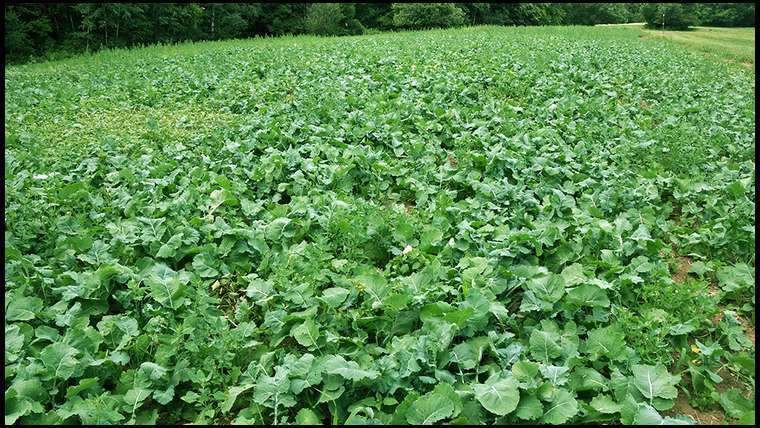
Hancock's Forage Kale Seed is a brassica which can withstand freezing temperatures while remaining green and sustaining forage quality. This brassica is a great option for extended winter grazing and it can support frequent grazing due to its persistence. ~~~
Hancock's Forage Kale Seed is a brassica which can withstand freezing temperatures while remaining green and sustaining forage quality. This brassica is a great option for extended winter grazing and it can support frequent grazing due to its persistence.
Product Information
- Application or Use: Pasture, Food Plot, Cattle Forage, Livestock Grazing
- Germination Time: 7 - 14 days, under optimal conditions
- Growing Locations: Warm Season, Transition Zone, Cool Season
- Height: 1 - 3 feet
- Sunlight Requirements: 6 - 8 hours, full sun for best results
- Advantages: Hybrid brassica that withstands freezing temperatures while remaining green and sustaining forage quality.
- When to Plant: Recommended planting time for Northern Regions is summer when evening temperatures are consistently below 65 degrees, recommended planting time for Southern Regions is Fall, consistently below 65 degrees.
Product Detail
- Cattle and wildlife food plots
- Early maturing
- Wide range of soils
- Extended winter grazing
- Multiple grazings with high yields
Product Information
The Subzero Forage Kale is early maturing at 8-9 weeks but it can be left until 13 weeks before grazing. This brassica tolerates a wide range of soil pH’s while being tolerant of low soil fertility. This seed is mainly utilized for cattle and wildlife food plots.
*Product packaging may appear different than what is pictured.~~~
The Subzero Forage Kale can be planted at a rate of 3-4lbs per acre and at a depth of 1/8 - 1/4 inch. This seed is best planted in the fall for optimal results. This seed can also be planted through the winter in warmer climates.
Original: $26.99
-65%$26.99
$9.45Product Information
Product Information
Shipping & Returns
Shipping & Returns
Description
Hancock's Forage Kale Seed is a brassica which can withstand freezing temperatures while remaining green and sustaining forage quality. This brassica is a great option for extended winter grazing and it can support frequent grazing due to its persistence. ~~~
Hancock's Forage Kale Seed is a brassica which can withstand freezing temperatures while remaining green and sustaining forage quality. This brassica is a great option for extended winter grazing and it can support frequent grazing due to its persistence.
Product Information
- Application or Use: Pasture, Food Plot, Cattle Forage, Livestock Grazing
- Germination Time: 7 - 14 days, under optimal conditions
- Growing Locations: Warm Season, Transition Zone, Cool Season
- Height: 1 - 3 feet
- Sunlight Requirements: 6 - 8 hours, full sun for best results
- Advantages: Hybrid brassica that withstands freezing temperatures while remaining green and sustaining forage quality.
- When to Plant: Recommended planting time for Northern Regions is summer when evening temperatures are consistently below 65 degrees, recommended planting time for Southern Regions is Fall, consistently below 65 degrees.
Product Detail
- Cattle and wildlife food plots
- Early maturing
- Wide range of soils
- Extended winter grazing
- Multiple grazings with high yields
Product Information
The Subzero Forage Kale is early maturing at 8-9 weeks but it can be left until 13 weeks before grazing. This brassica tolerates a wide range of soil pH’s while being tolerant of low soil fertility. This seed is mainly utilized for cattle and wildlife food plots.
*Product packaging may appear different than what is pictured.~~~
The Subzero Forage Kale can be planted at a rate of 3-4lbs per acre and at a depth of 1/8 - 1/4 inch. This seed is best planted in the fall for optimal results. This seed can also be planted through the winter in warmer climates.